Posts

Week 15: Baking Soda and Vinegar

Image
  What did you learn this week? This week, I learned that when you burn something, a lot of the mass is turned from solid to gas in the form of smoke. My group burned a couple of paper towels and matches and almost all of the mass was turned into smoke. I also learned that carbon dioxide is denser than the air we breathe, so when we mix baking soda and vinegar the carbon dioxide this chemical reaction makes stays in the container. Carbon dioxide is also not flammable, so it can be used to put out a flame.  Are you able to relate what you learned to what you already know? Yes, I already knew that mixing baking soda is a chemical reaction and that it creates gas. I didn't know that the gas it creates is carbon dioxide. I already knew that the mass of an uncontained fire decreases, but I didn't know the mass changed as much as it does, which was pretty cool to see. I also already knew that chest freezers, like the ones at Trader Joes, hold the cold air better, but I didn't kno...
Week 14: Plungers, Ice, and Condensation

Image
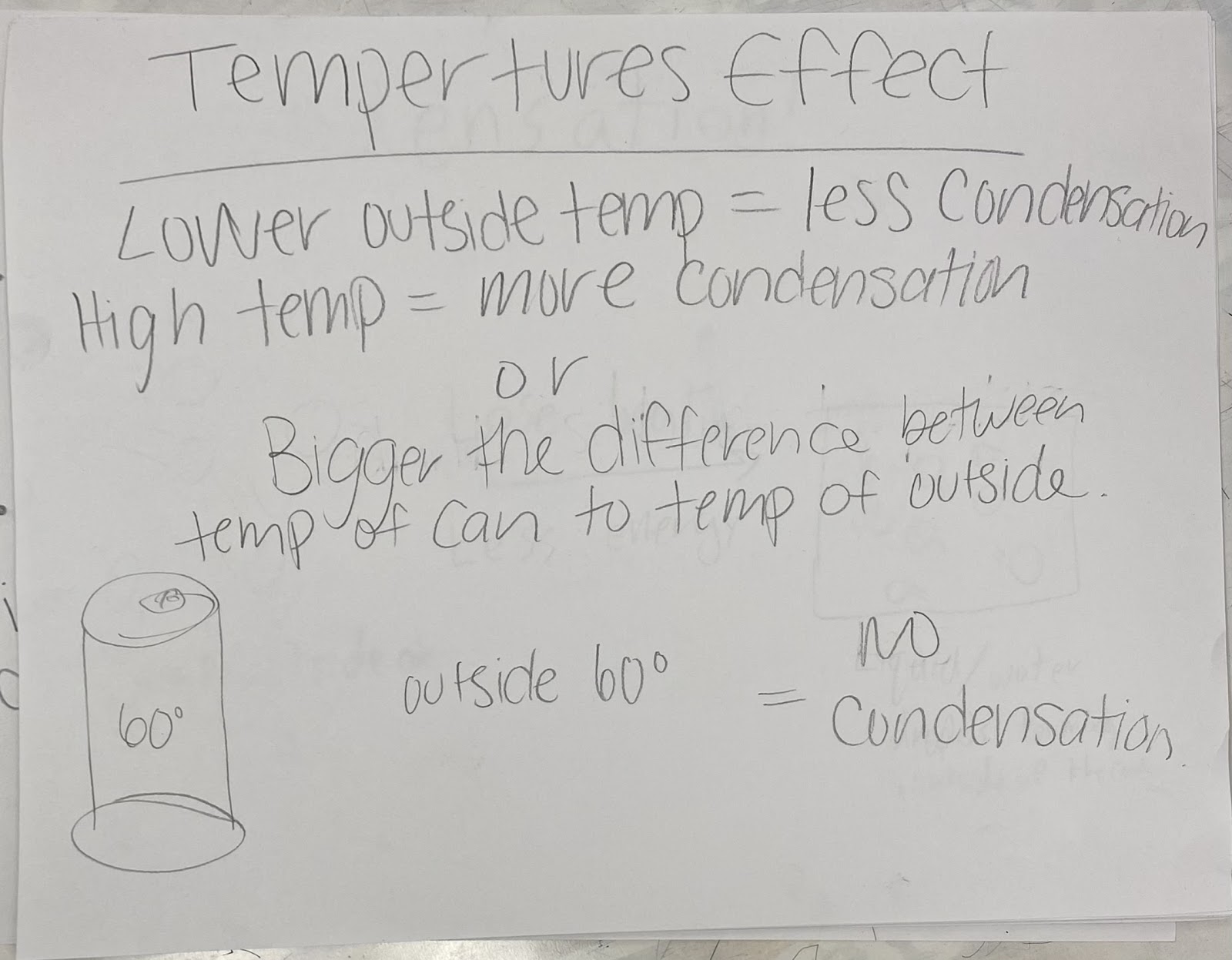
What did you learn this week? This week, I learned that plungers suction to things because of the force of air molecules pushing out from inside the plunger and in from outside the plunger. The force going both ways, but not letting any molecules actually go in or out causes the suction. I learned that a pot of water will boil faster with a lid on it. The lid traps the heated water molecules in so they continue to spread the heat to the other water molecules. If you take the lid off, the hottest and fastest water molecules will escape, taking heat and energy with them.  Are you able to relate what you learned to what you already knew? I already knew that boiling water without a lid would let water molecules escape, but I didn't know that those were the hottest molecules that were escaping. But, it makes sense because they are leaving in the form of steam. I also already knew the basic concept behind condensation forming on cold drinks, but I didn't really know how to articulate...

Week 13: Density and M&Ms

Image
 What did you learn? This week, I learned that when you add sugar to water, the water gets denser, so dissolving other substances into the water will take longer because there are more and bigger molecules in the water. I also learned that different colors of M&M coating take different amounts of time to dissolve in water. Are you able to relate what you learned to what you already know? Yes! I already knew that when things heat up the molecules move faster, which we saw in the M&M activity with water of different temperatures. When the water was hotter, the molecules were moving faster, so the coating dissolved into the water faster. I also already knew that the sugar water would slow the dissolving of the coating, but I wasn't entirely sure why it would, so this experiment helped to explain it. How can you apply what you've learned to your future teaching? The M&M activity is one that is very easy to do and requires few materials to complete, so it's great for...

Week 12: Properties of Matter

Image
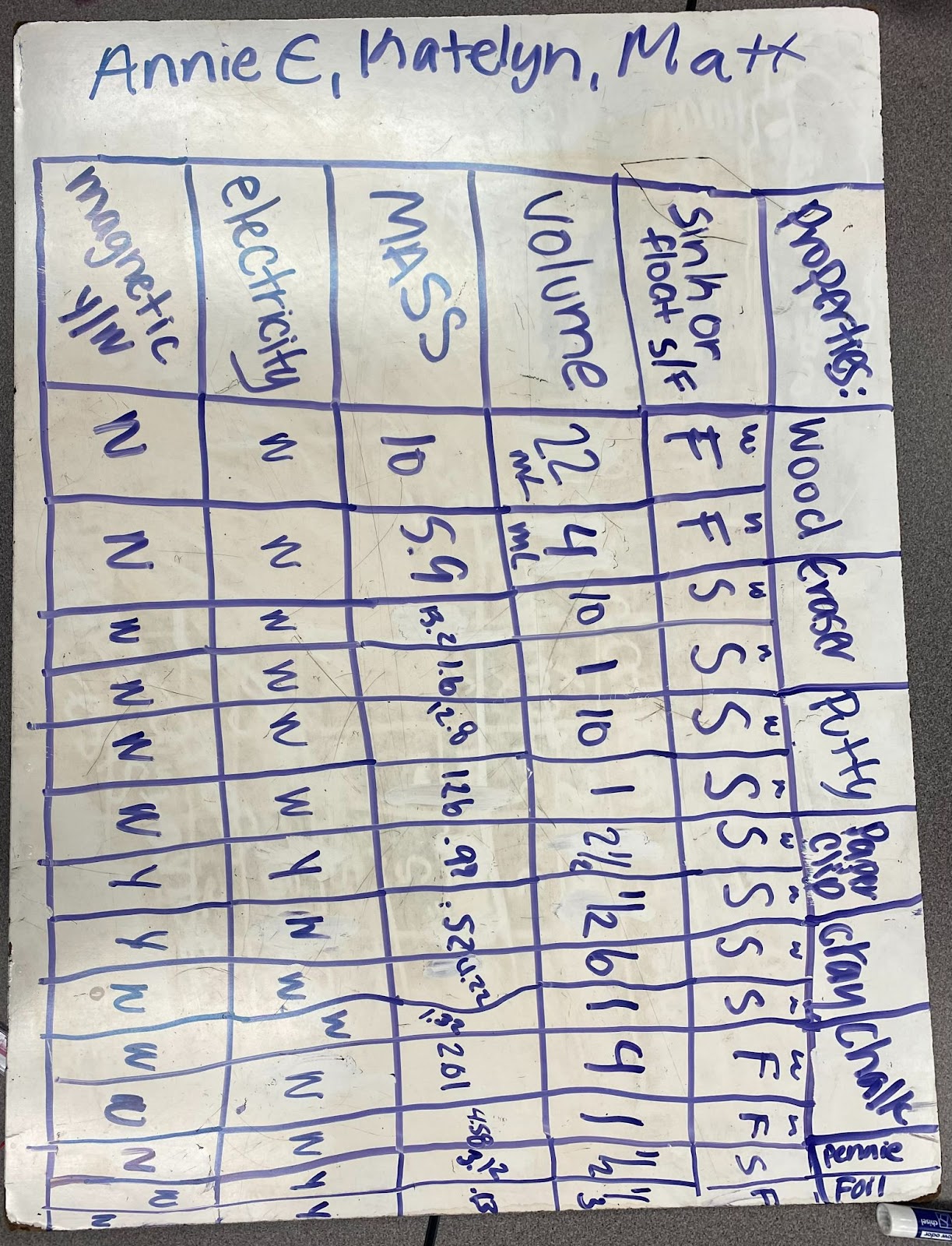
  What did you learn this week? This week, I learned that when things are broken into smaller pieces, the mass and volume decreases, but most other properties will stay the same. I also learned that chalk floats for a little bit, but eventually sinks. Pennies, paper clips, and aluminum foil conduct electricity, but wax, erasers, and wood do not.  Are you able to apply what you learned to what you already know? I already knew many of the properties of matter and that they vary from object to object. I didn't know that pennies weren't magnetic, which was pretty interesting because it's made of metal. I thought all metals would be magnetic. I also already knew that pumice floats, but I didn't know why it floats, which was pretty interesting to hear about.  What are your new or remaining questions? Not necessarily a question, but I'm curious about what other properties we could test that would show interesting results, like what things float that you wouldn't expect...

Week 11: Matter

 What did you learn? In lab this week, I learned the importance of teaching science in elementary schools. We did lots of experiments that we could do with students. Most of these experiments were things I've never done before, like the melting ice experiment. I thought it was really interesting that the pan melted the ice faster than the wood. I also learned that when you mix baking soda and vinegar, the final product is colder than either of the original ingredients.  Are you able to relate what you learned to what you already know? Yes, for the coke float experiment, I already knew that Diet Coke floats, but I didn't think either of the regular Cokes would float so that was pretty cool to see. I already knew that drinks only "sweat" when they are in warmer rooms and our room was cooler, so the experiment didn't really work. I'm not sure how warm the room would have to be for the experiment to work, so that would be interesting to test out. I have also previ...

Week 10: Natural Selection and Evolution

 What did you learn this week? This week, I learned that about the various performance expectations related to evolution in the NGSS. We discussed how some of these performance expectations were broken down into the 3 dimensions of the NGSS. I also learned about migration and how it can lead to more genetic variation and diversity within populations.  Are you able to relate what you learned to what you already know? Yes, I already knew about migration, but I had never considered how this can impact a population's diversity, which I think is very interesting. This week, we also reviewed what we already learned about the 5 big ideas about natural selection, the causes of natural selection, and the drivers of evolution. We learned about genetic drift, which I have previously learned about, but learning about it again was very helpful, as I only vaguely knew what it was, but I have a much better understanding now. How can you apply what you've learned to your future teaching? I th...

Week 8: DNA Mutation and Natural Selection

Image
 This week I was sick, so I did not attend lab. In place of my lab photos, here's one of my puppy, Jay. In lecture this week, I learned about the causes of natural selection - mutation, adaptation, competition, chance events, and other environmental factors. We also got to play around with simulators with different mutated genes that led to different traits being present in populations of frogs and moths.  I already knew most of what we learned about natural selection, but it was a nice refresher. I knew what natural selection is and how it works, but seeing the causes divided into 5 groups was helpful for me to remember them. Doing the simulations was also helpful in visualizing what natural selection actually looks like and how predators and environment can impact how a species looks.  I would definitely use the simulations in my future classroom. I think they're both great hands-on activities for students to do that don't require you to spend money on supplies or do mu...

Week 7: DNA

Image
This week, we learned about DNA, RNA, mRNA, and tRNA and all of their purposes. We learned the structure of DNA and created models of it using Twizzlers and Dots. We also checked in on our fast plants, which have started to form seed pods, and our caterpillars, which have turned into butterflies. We also learned about genes and how babies get their genes from their parents and did the baby lab.  I already knew about DNA and RNA, but this was a nice refresher on their structures and purposes. I knew of mRNA and tRNA, but I wasn't sure what they exactly did, so this lab was helpful in clarifying that for me. I also already knew about dominant and recessive genes and how they are expressed. I think it would be interesting to talk more about how this works with blood types and skin color, which are determined by multiple genes.  I think the DNA modeling activity we did was really fun and engaging, so I would definitely use that in my future classroom/teaching. I think I would modi...

Week 6: Food Chains and Sea Turtles

Image
  This week, I learned a lot about sea turtles. From the moment their eggs are laid, they are in harm's way. Only 1 in 1,000 sea turtles survives the journey from their eggs to adulthood. Luckily for them, there are some ways people can help them to survive, but humans also cause them harm in the form of pollution and running them over. I also learned about food chains in different biomes and how they can be impacted by various problems, such as algae blooms blocking the sunlight from reaching plants in the ocean. We also checked in on our fast plants, which are flowering, so we pollinated them. And we checked in on the caterpillars, which are now in their chrysalises.  I am able to relate some of this learning to my prior knowledge. I was aware that sea turtles are endangered species, but I didn't know how perilous their lives really are, which is why they are an endangered species. I also already knew that sea turtles are impacted by human activity, like pollution in the oce...

Week 5: Ecosystems, Habitats, and Food Chains (on Zoom)

 This week in lab, we learned about habitats and ecosystems and how some places can be both. We also learned about how some animals interact with their environments, like how dolphins create mud walls to trap fish, leading them to try jumping out of the water and landing in the dolphins mouths. Then, we learned about food chains and how they are different than food webs. Food webs are like food chains, but show more than one chain of consumption.  I already knew most of the stuff that we learned. Although, I didn't know the difference between food chains and food webs, I thought they were the same thing. I also was a bit confused on the difference between habitats and ecosystems before this week, but now I understand the relationship between the two.  I could definitely apply my learning on food chains and food webs to my future teaching. I would like to do on lesson on the differences between them and have my students make their own chains and webs, maybe as posters show...

Week 4: The 5E Model

 This week, I learned what the 5E model is. The 5E model is a way of teaching science that involves 5 phases all starting with E: engage, explore, explain, expand/extend, and evaluate. These phases create a guideline for teachers to create science lessons are are effective for student conceptual learning. I am not able to connect this to my previous knowledge, as this is an entirely knew framework to me. I think it is really interesting and seems like it would be super effective to use in my future classroom. I think the framework is super clear and easy to understand, as each phase has a word associated with it and they each have a little description of what that phase entails. Here are my answers to the 5E worksheet. (the format is a bit messed up because it went from word to google docs) 5E worksheet

Week 3: Life Cycles and Fast Plants

Image
This week, I learned what fast plants are and how they grow. I learned that you can plant a seed and have it go through it's entire life cycle in 40 days, ending with new seeds to plant. I also learned about life cycles and how some of them are complete or incomplete metamorphosis, so they aren't all the same.  I am able to relate my learning to my previous knowledge, as I already when the life cycle stages of a caterpillar/butterfly. It was interesting to see it actually happen in the video we watched in class. I am also pretty familiar with the life cycle of most plants, like the fast plants, but getting to see it all sped up in very interesting, rather than just pictures of each stage - it's cool to see it transition from one stage to the next.  This week, we did 2 activities in class - creating life cycles out of play-dough and planting fast plants. I would love to be able to do both of these activities in my future classroom, as they were both fun activities that invol...

Week 2: Characteristics of Living Things

Image
 This week, I learned the 8 characteristics of living things and used those characteristics to determine if things are living or nonliving. I also learned that a seed is not a living thing, but it has the potential to be one, with the right conditions.  This can apply to my teaching, as this week has given me some great examples of ways to incorporate hands-on learning in a science classroom by making posters of what we have learned and growing plants to show the different stages and what conditions they need to survive and grow.  After this week, one question I have is what ways (other than making posters) can we help students to remember the characteristics of living things in a fun and hands-on way?

Week 1: NGSS

Image
 This week, I learned what the NGSS is. Before class, I didn't know what it was or how it was relevant to my future teaching. Now, I have a decent understanding of how to read standards and where they apply in the classroom. Iowa is one the many states that has adopted the NGSS, so I will definitely need to be able to read and understand the standards in my future teaching career. One question I have regarding the NGSS is why only some states use it and others use different standards. I think it would be beneficial for all American students to be taught science using the same standards, especially for students that move frequently, so they can pick up where they left off at their previous school. In lab, we also drew our future classrooms with features we want to include. One thing my group included is pod seating, so students each have their own desk, but can also do group work frequently.